
Supporting Your Neurodivergent Child at Home: Understanding What May Be Happening
If your child is struggling at home, they may not be trying to be difficult. They may be overwhelmed, anxious, overloaded, frightened of getting it wrong or unable to explain what is happening inside them. What looks like refusal, rudeness or laziness may actually be panic, shame or self-protection.
Connection Before Correction
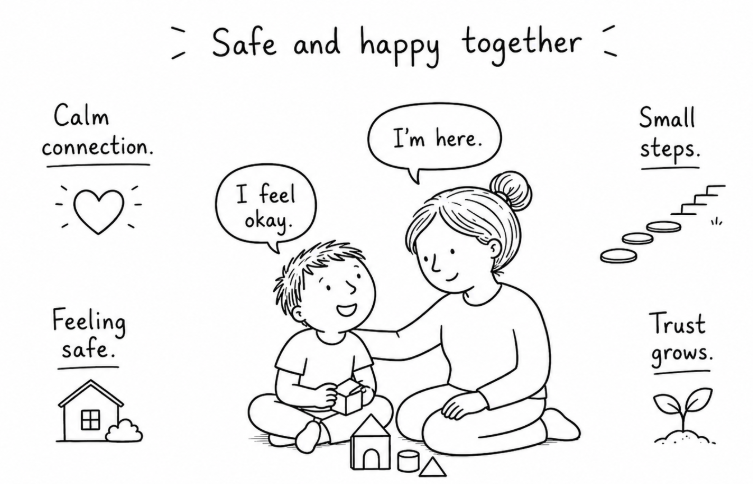
When your child is distressed, shut down or angry, they are unlikely to respond well to being corrected, questioned or pushed. Start by helping them feel safe. A calm “I can see this feels hard” or “We can come back to this in a minute” will usually get you further than “Why are you behaving like this?”
Use Fewer Questions
Questions such as “What’s wrong?” or “Why won’t you just do it?” can feel too big and can make a child freeze. Try smaller questions instead, such as “Is the first bit hard?” or “Would it help if I sat with you?” You can also say, “You don’t have to explain it all now.”
Give More Processing Time
Say what you need to say once, then pause. Do not keep repeating yourself, staring or demanding an instant answer. Try saying, “Have a think. I’ll come back in a minute.” Then do something low-pressure nearby.

Break Things Into Tiny Steps
Instead of saying “Get ready for bed”, say “Put your pyjamas on.” Then pause. Then say “Brush your teeth.” One step at a time is much easier for an overwhelmed child to manage.
Make Praise Calm and Specific
Big praise can sometimes feel like pressure. Instead of “You’re amazing”, try “You came back even though that was hard” or “You tried the first question.” Notice the effort, the recovery or the small step forward.
Correct Gently and Specifically
Avoid comments that feel personal, such as “You’re not listening” or “You’re being rude.” Try “Use a quieter voice please” or “Let’s try that sentence again.” Correct the action, not the child.
Offer Controlled Choices
This gives your child some control without handing over the whole situation. Try “Do you want to start with reading or maths?” or “Do you want two more minutes or five more minutes?” The boundary stays with you, but the child has a voice.
Look for the Real Barrier
If your child refuses something, ask yourself what might be underneath it. Is it too noisy? Too bright? Too sudden? Too difficult? Too uncertain? Too much language? Too much pressure? The obvious problem is not always the real problem.
Stay Calm and Steady
Your child may push you away when they are overwhelmed. Try not to take it personally. They need you to be the steady adult who does not escalate, does not shame them and does not give up on them.

Measure Progress Differently
Progress may not be a finished worksheet, a tidy room or a perfect bedtime. Progress may be that your child calmed down more quickly, accepted help, used words, tolerated a change, tried one small step or trusted you slightly more.
Final Message for Parents
Your child does not need you to be perfect. They need you to be calm, consistent, curious and willing to adapt.


Comments