
When Your Child Shuts Down or Refuses: What Might Help?
When a child refuses to work, walks away, becomes upset or shuts down completely, it can feel incredibly frustrating and worrying as a parent. It is easy to think, “Why won’t they just do it?” or “Why has this become such a battle?”
For many children, especially those with anxiety, autism, ADHD, SEMH needs or a history of finding school difficult, behaviour is often communication. It may be their way of saying, “This feels too hard,” “I don’t understand,” “I’m overwhelmed,” or “I’m scared of getting it wrong.”
The aim is not to let children do whatever they want. The aim is to understand what is happening underneath the behaviour and help them find a way back.
Pause Before Reacting
When a child refuses, throws something or walks away, our natural instinct is often to correct them straight away. Sometimes this is necessary, especially if there is a safety concern. However, if your child is safe, a short pause can help.
Before reacting, ask yourself:
Is the task too difficult or too long?
Are they tired, hungry, anxious or overwhelmed?
Has something happened earlier in the day?
Are they frightened of failing?
The behaviour you see may not be the beginning of the problem. It may be the final straw.
Lower the Pressure
Reducing pressure does not mean giving in. It means making the first step feel possible.
If writing is too much, begin by talking. If a worksheet feels overwhelming, try a whiteboard or just one question. If reading aloud causes anxiety, read first and let your child follow.
You might say:
“Let’s just do the first tiny bit together.”
“You don’t have to write it yet. Talk it through with me first.”
The aim is not to avoid learning. The aim is to help your child re-engage without feeling trapped.

Hold Calm Boundaries
Children still need boundaries when they are distressed. In fact, calm boundaries can help them feel safer.
Instead of saying:
“Stop that now.”
try:
“I can see this is hard but I won’t let you throw things.”
Or:
“We agreed that things stay on the table.”
This keeps the boundary clear without turning it into a battle. Calm does not mean weak. Calm means the adult is still in control of themselves.
Offer Small Choices
Many children who struggle with learning feel they have very little control. Offering small choices can reduce anxiety.
For example:
“Do you want to use a crayon or a pen?”
“Shall we do one question now or after a drink?”
“Do you want help or quiet for a minute?”
The key is to offer choices that are acceptable to you. Your child can have some control but they should not be in charge of the whole situation.
Give Time and Use Fewer Words
If a child is overwhelmed, too many questions can make things worse. “What’s wrong?” “Why are you doing this?” and “Are you listening?” may feel like pressure rather than help.
Sometimes it is better to say less and wait.
Sit nearby. Keep your voice calm. Give your child time to process. Silence is not always rudeness. Sometimes it is a child trying to manage feelings they cannot yet explain.

Make Mistakes Feel Safe
Many children avoid work because they are scared of getting it wrong. They may have had years of feeling behind, embarrassed or judged.
Try to make mistakes feel normal.
You could say:
“That mistake helped us see what to try next.”
“You stayed with it even though it was tricky.”
Children need to know that getting something wrong will not lead to shame, anger or rejection.
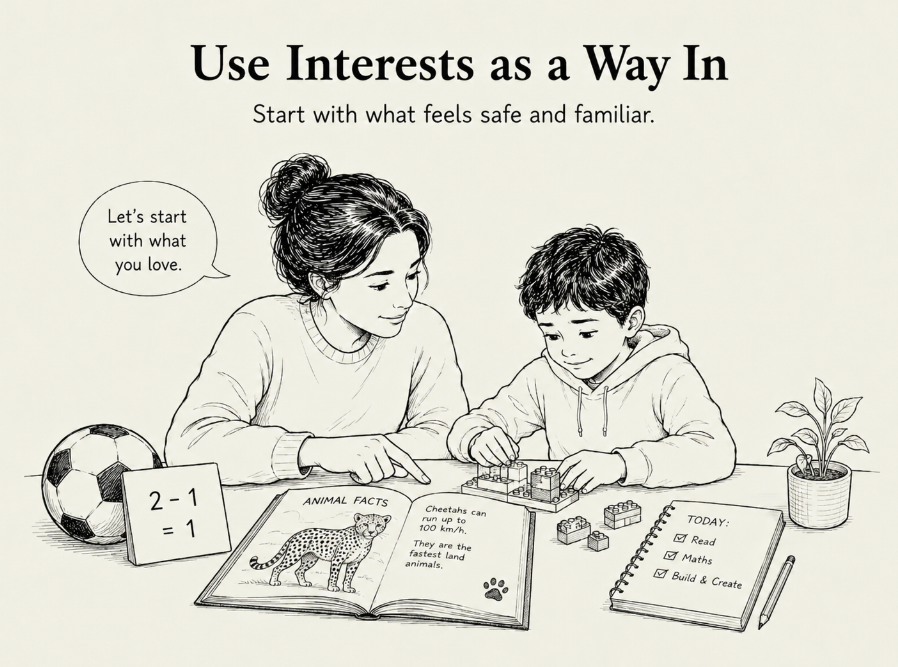
Use Interests as a Way In
Interests can be a helpful bridge back to learning. If your child loves football, use scores for maths. If they love animals, read animal facts. If they enjoy LEGO, use it as a calming activity before returning to the task.
This is not about bribery. It is about connection. Children often engage better when we start with something that feels safe and familiar.
Final Thought
The goal is not to win every battle. The goal is to help your child feel safe enough to come back to connection and learning.
A calm adult, a smaller first step, a clear boundary and a little patience can make an enormous difference.


Comments