
Tailoring a Curriculum to Meet Individual Needs
A personalised curriculum recognises that success looks different for every child. While core academic skills remain important, learning can be enriched through practical, hands-on experiences that develop confidence, independence and life skills alongside traditional subjects.
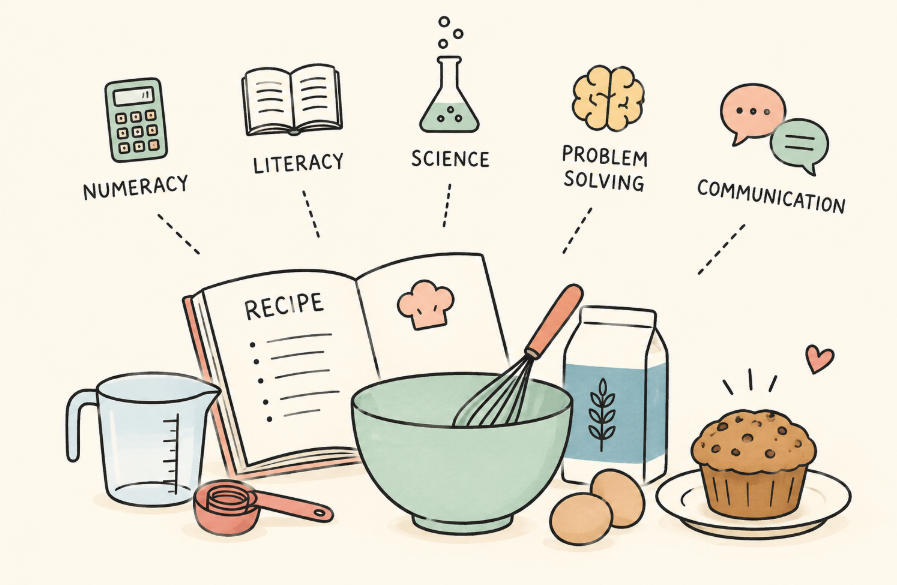
Activities such as cooking provide valuable opportunities to develop numeracy through measuring ingredients, literacy through reading and following recipes and science through understanding changes in food during preparation. Beyond the academic benefits, cooking encourages organisation, problem-solving, communication and self-reliance.
There is immense pride in watching a young person independently recreate a recipe they have previously cooked and in seeing the pride they show when they are complimented on their skills by trusted adults or family members. These moments of success help build self-belief and demonstrate how far they have progressed.
I once taught a student how to make gnocchi from scratch with a simple tomato sauce to accompany it. Later that week, I received a lovely email from his family to say that he had spent a whole day recreating the dish for a large family gathering. They had all loved it and the student commented, “I can’t believe I spent all day cooking this only for it to be gone in 10 minutes!” High praise indeed.
Sewing is another practical skill that offers a wide range of learning opportunities. It develops fine motor skills, concentration, patience and creativity while also incorporating mathematical concepts such as measuring and pattern making. The sense of achievement is particularly evident when a child uses an item they have created themselves. Seeing the pride of a child when their dog continues to wear its homemade bandana and receives compliments is second to none.

It is also incredibly fulfilling to see a child who usually struggles to focus for more than a few minutes sit and enjoy creating a cat toy. Through experimenting with stitches, trying different materials and adapting the design, the child can become completely absorbed in the activity.
By building a curriculum around individual needs and interests, Alternative Provision can re-engage young people with learning, nurture their confidence and equip them with the practical skills they need for future education, employment and independent living. Most importantly, it helps them experience success, often for the first time in their educational journey, while encouraging them to believe in their own potential and build meaningful relationships..
By Alison Smith, one of our valued, experienced tutors


Comments